The W-9 is One Page. Here’s How to Fill It Out Without Screwing It Up.
You didn't start your business to be a bookkeeper. We did. $ You didn't start your business to be a bookkeeper. We did. $ You didn't start your business to be a bookkeeper. We did. $ You didn't start your business to be a bookkeeper. We did. $ You didn't start your business to be a bookkeeper. We did. $ You didn't start your business to be a bookkeeper. We did. $ You didn't start your business to be a bookkeeper. We did. $ You didn't start your business to be a bookkeeper. We did. $



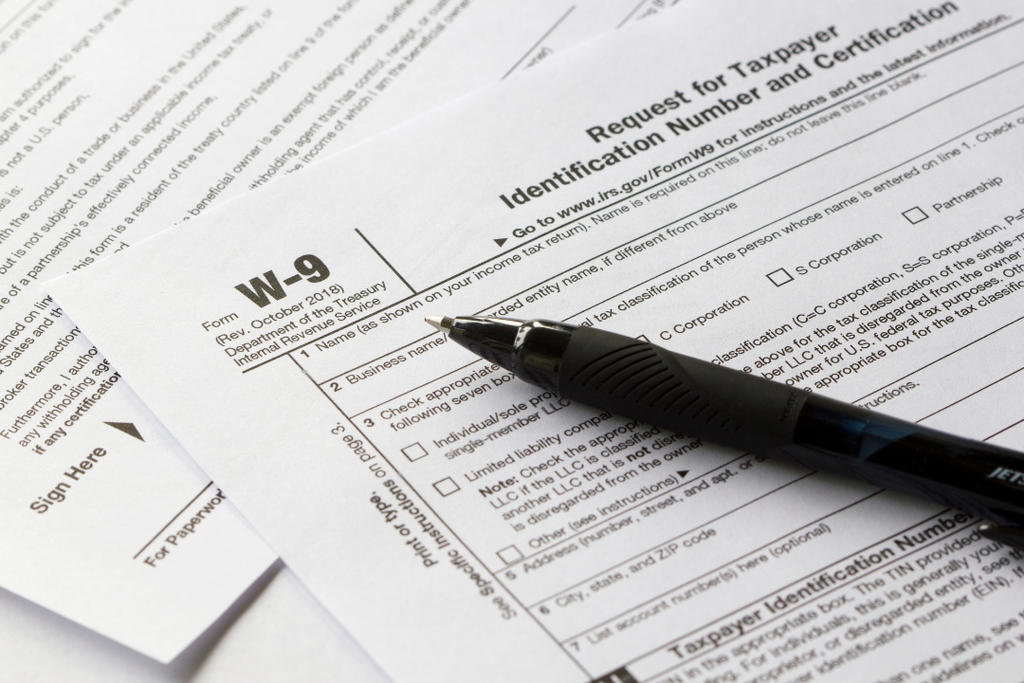
A business owner recently walked into my “Ask a Bookkeeper” office hours at the Small Business Resource Center with a W-9 in hand and one question: “Am I doing this right?”
We went through it line by line. And it reminded me why this post needed to exist.
The W-9 is one page. One. And it gets filled out wrong constantly.
I see it every month. W-9s land in our client portal with the wrong box checked, the wrong name on the wrong line, or a tax ID that doesn’t match the name above it. Then 1099 season hits, and the IRS sends a lovely little notice: the name and TIN don’t match.
That notice is 100% avoidable. Let’s fix it.
Two Sides of the Same Form
You deal with W-9s from both directions:
- You fill one out when a client pays you for services. They need your info to send you a 1099.
- You collect one from every contractor and vendor you pay. You need their info to send them a 1099.
Same form. Different job. We’re covering both.
The 3 Mistakes I See Most
1. Checking “S corporation” when you’re not one.
An S-corp is a tax election you file with the IRS. Forming an LLC doesn’t make you an S-corp. Hearing about it on a podcast doesn’t make you an S-corp. If you never filed the election and got an acceptance letter back, you’re not one. Don’t check that box.
2. Putting your LLC’s name on Line 1 when it’s a disregarded entity.
Line 1 is for whoever the IRS actually taxes. For most single-member LLCs, that’s you, not the LLC.
3. Checking the wrong tax classification box.
The box on Line 3a describes whoever is on Line 1. Not your logo. Not your business card. The taxpayer.
“Disregarded Entity,” in Plain English
If you own a single-member LLC and you haven’t elected to be taxed as a corporation, the IRS ignores your LLC for income tax purposes. It “disregards” it. Your business income lands on your personal tax return.
So on the W-9, the IRS wants the person behind the LLC:
- Line 1: Your name. Your legal, personal name.
- Line 2: Your LLC’s name.
- Line 3a: Check “Individual/sole proprietor.”
- Part I: Your SSN or your EIN.
Here’s the catch nobody tells you. The IRS matches the name on Line 1 against the name on file for that tax ID. If your EIN is registered under your LLC’s name and you put your personal name on Line 1, that’s a mismatch, and that’s where those IRS letters come from.
Not sure how your EIN is registered? Check. Pull out your original EIN confirmation letter (the CP 575), or call the IRS Business & Specialty Tax Line and ask for a 147C verification letter. Look at the first name line. If it’s your name with the LLC underneath, you’re good. If it’s the LLC name only, you can ask the IRS to update it.
Fair warning: ask early. I requested this exact change on my own EIN, and the confirmation letter showed up ten months later. Ask me how I know.
Sole Proprietors: Get an EIN. Yesterday.
If you’re a sole proprietor, I’m going to say it loud for the people in the back: get an EIN.
Your Social Security number has no business floating around in your clients’ inboxes. An EIN gives you a tax ID you can hand out without handing out your identity. It also makes you look legit to clients, makes banking easier, and has you ready if you ever hire.
It’s free. It takes about 10 minutes. And you only get it from IRS.gov. Do not pay a third-party site hundreds of dollars for it.
I walk through exactly how to get one here: Get an EIN Yesterday: The Simple Move That Protects Your Social Security Number
Once you have it, your W-9 looks like this: your name on Line 1, your business name or DBA on Line 2 (if you have one), “Individual/sole proprietor” checked, and your EIN in Part I.
The W-9, Line by Line
Line 1: Name. The person or entity that pays the tax. Sole prop or disregarded LLC? Your personal name. Corporation, partnership, or LLC taxed as one? The entity’s legal name.
Line 2: Business name. Your LLC name or DBA, if different from Line 1. Leave it blank if it’s the same.
Line 3a: Tax classification. Check one box for whoever is on Line 1:
- Individual/sole proprietor (this includes your disregarded single-member LLC)
- C corporation
- S corporation
- Partnership
- Trust/estate
- LLC, with a letter for how it’s taxed: C, S, or P (partnership). Don’t use this box if your LLC is disregarded.
Line 3b: Foreign owners. This only applies if you checked Partnership, Trust/estate, or LLC taxed as a partnership and you have foreign partners, owners, or beneficiaries. Most of you can skip it.
Line 4: Exemptions. Most small businesses leave this blank. Some corporations have an exempt payee code. Not sure? Leave it blank and ask us.
Lines 5 and 6: Address. Where you want your 1099 mailed. Keep it current.
Line 7: Account numbers. Optional. Skip it.
Part I: Taxpayer Identification Number. SSN or EIN, and it must match the name on Line 1, as the IRS has it on file. This is the line that triggers the IRS notices.
Part II: Sign and date. Yes, you have to sign it. An unsigned W-9 isn’t done.
Quick Cheat Sheet
| If you are… | Line 1 | Line 3a | Tax ID |
| Sole proprietor | Your name | Individual/sole proprietor | Your EIN (preferred) or SSN |
| Single-member LLC (disregarded) | Your name | Individual/sole proprietor | Your SSN, or your EIN if it’s registered under your name |
| LLC taxed as an S-corp | LLC’s name | LLC, enter “S” | LLC’s EIN |
| Corporation with S election | Corporation’s name | S corporation | Corporation’s EIN |
| Multi-member LLC | LLC’s name | LLC, enter “P” | LLC’s EIN |
Sending Your W-9: Protect That SSN
Here’s my hard line: I would never email a form with my SSN on it. Ever.
An EIN? I’ll email that. It’s a business number, and it’s not the same level of risk. But if your SSN is on the form, it goes through a secure portal or it doesn’t go.
At Lookout, every W-9 from our clients comes through our secure client portal. When we need W-9s from your vendors, we request those through the portal too. No inbox roulette.
Collecting W-9s: No W-9, No Payment
Now for the other side.
You can hold payment until a vendor gives you a W-9. And you should.
Starting in 2026, you’ll issue a 1099-NEC to any service provider you pay $2,000 or more in a year. But don’t wait to see if someone crosses that line. Collect the W-9 before the first payment, every time. I broke down why here: Stop Chasing Vendors in January. Collect the Damn W-9s Now.
General contractors, this one’s for you: hold payment until you have the W-9 and their Certificate of Insurance (COI). If a sub doesn’t carry their own coverage, your insurance carrier can charge you to cover them at audit time. That bill can get ugly fast.
Before You Send (or Accept) a W-9: The Checklist
- Is it the current version of the form?
- Is the right name on Line 1 (the taxpayer, not the brand)?
- Does the Line 3a box describe whoever is on Line 1?
- Did someone check S-corp without an actual S election? Ask.
- Does the tax ID match the name on Line 1?
- Single-member LLC? Is the EIN registered under the owner’s name (check the CP 575 or 147C)?
- Is the address current?
- Is it signed and dated?
- Did it come through a secure channel (especially if there’s an SSN on it)?
- Contractors: do you have their COI too?
If any box stays unchecked, don’t pay yet.
Want This Off Your Plate?
This is exactly what we handle for our Done-For-You Monthly Bookkeeping clients. When we spot a new vendor, we request the W-9 through our secure portal, follow up with reminders, review it for the mistakes above, and loop you in if someone goes radio silent. Come January, your 1099s are ready instead of a scavenger hunt.
👉 Work with Lookout Bookkeeping
Not ready for full support? Grab our free 75+ Tax Write-Offs list and start getting your deductions straight.
The W-9 is one page. Get it right once, and the IRS has nothing to write you about.


